Introduction
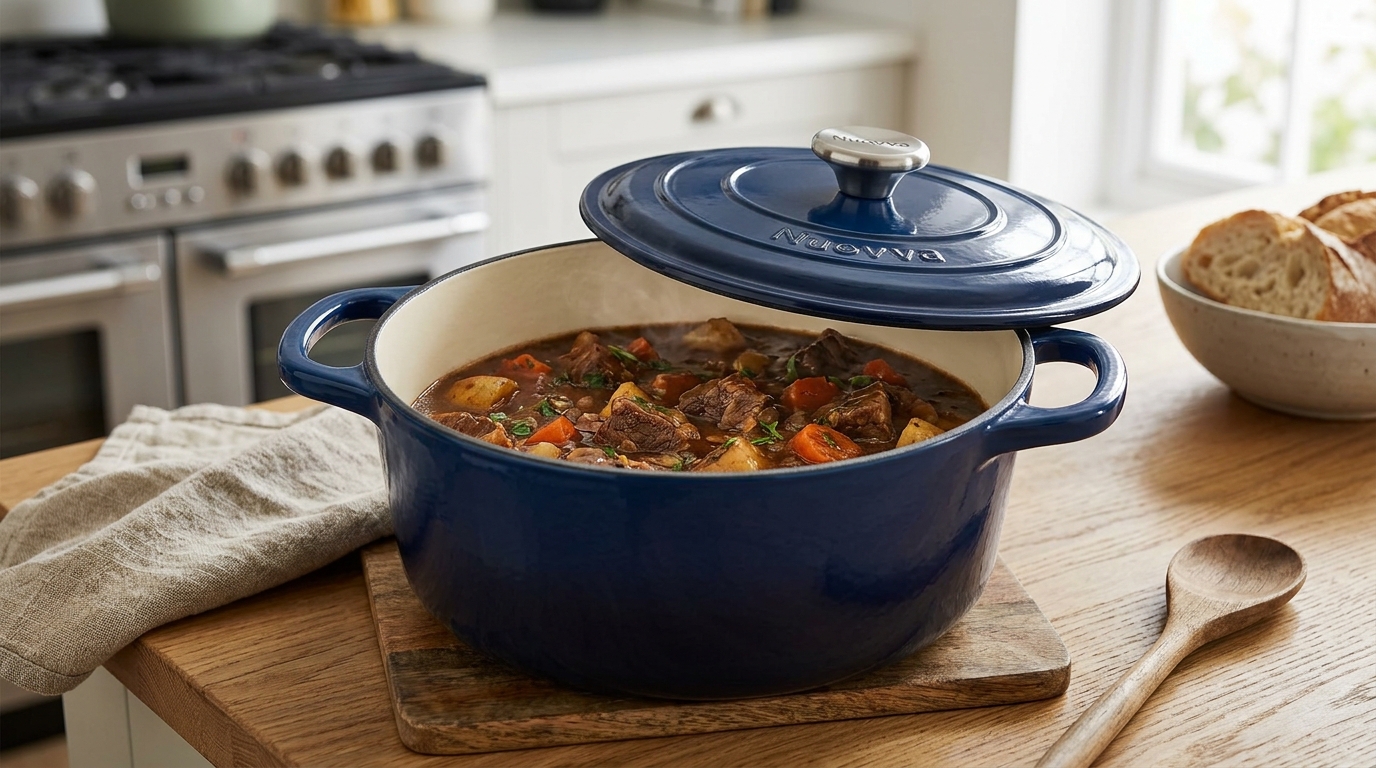
Cast iron cookware has remained a kitchen staple for generations, largely due to its durability and ability to handle a wide range of cooking methods. The Nuovva Enamelled Cast Iron Dutch Oven builds on that long-standing reputation while adding a non-stick enamel coating, a 6.4-quart capacity, and an oven-safe rating up to 500°F. Available in a 28cm size with a dark blue finish, this piece is designed to handle everything from bread baking to braising, stews, and roasting, making it a fairly multi-purpose addition to a kitchen.
This article takes a closer look at what this Dutch oven offers, the different ways it can be used across various cooking methods, who tends to find this type of cookware most useful, and a few practical considerations worth thinking through before adding one to a kitchen. As with any cookware purchase, understanding the details helps clarify whether it fits a particular cooking style.
Key Features
Enamelled Cast Iron Construction
At its core, this is a cast iron pot coated with an enamel finish. Enamelled cast iron combines the heat retention and even cooking properties traditionally associated with cast iron, while the enamel coating helps reduce the need for the seasoning process that bare cast iron typically requires, along with offering a smoother surface for cleaning.
Non-Stick Interior
The interior surface is described as non-stick, which is a somewhat distinctive feature for enamelled cast iron, since many traditional enamel coatings are not specifically marketed as non-stick. This kind of surface is generally intended to make food release and cleanup somewhat easier compared to standard enamel interiors.
6.4-Quart Capacity
A capacity of 6.4 quarts places this Dutch oven in a fairly generous size range, suitable for preparing meals for a family or for batch cooking dishes like stews, soups, or braises that benefit from a larger cooking vessel.
Oven-Safe up to 500°F
One of the more notable specifications is the oven-safe rating of up to 500°F, which is a relatively high threshold for enamelled cookware. This kind of heat tolerance is generally what makes Dutch ovens suitable for tasks like bread baking, which often requires higher oven temperatures than typical braising or stewing.
Heavy-Duty Build
Cast iron cookware is generally recognized for its heavy, durable construction, which contributes to even heat distribution and retention throughout the cooking process. This weight and density are often cited as reasons cast iron performs well for slow, low-temperature cooking methods.
28cm Size with Lid
The pot is specified at 28cm, which refers to its diameter, and comes with a fitted lid. A well-fitted lid is generally important for methods like braising, where trapping moisture and heat within the pot plays a key role in the cooking process.
Dark Blue Finish
The dark blue exterior color is primarily an aesthetic choice, offering a distinct look compared to more traditional black or red cast iron finishes commonly found in the category.
How It Can Be Used
Given its size, heat tolerance, and construction, this type of Dutch oven tends to be used across a fairly wide range of cooking methods.
Bread baking. Dutch ovens have become particularly popular for no-knead and artisan-style bread baking, since the enclosed pot helps trap steam during the initial baking phase, which can contribute to a well-developed crust. The high oven-safe rating on this model supports the higher temperatures often required for this kind of baking.
Braising. Braising involves cooking meat or vegetables slowly in a small amount of liquid, typically starting on the stovetop and finishing in the oven. The heavy construction and well-fitted lid of a Dutch oven are generally well suited to this method, helping maintain consistent, even heat throughout the process.
Stews and soups. The larger 6.4-quart capacity makes this pot practical for preparing bigger batches of stew or soup, which can then be portioned out for leftovers or stored for later use.
Roasting. Beyond stovetop use, Dutch ovens are frequently used for oven roasting, particularly for larger cuts of meat or whole poultry, where the pot’s ability to retain and distribute heat evenly can contribute to more consistent cooking results.
General stovetop cooking. Many Dutch ovens, including enamelled cast iron models like this one, can also be used directly on the stovetop for tasks like sautéing vegetables or browning meat before transferring the pot to the oven for further cooking.
Who It May Be Suitable For
This type of cookware tends to appeal to a fairly broad range of home cooks, including:
- Those interested in home bread baking, particularly no-knead or artisan-style recipes that rely on a Dutch oven’s heat retention and steam-trapping properties.
- Home cooks who frequently braise or slow-cook meats, given the pot’s heavy construction and well-fitted lid, which are generally well suited to this cooking method.
- Families or those who batch cook, since the 6.4-quart capacity allows for larger quantities of stews, soups, or roasted dishes in a single pot.
- Cooks looking for versatile cookware that can transition between stovetop and oven use across a range of recipes.
- Those who prefer a non-stick interior compared to bare cast iron, which typically requires more involved seasoning and maintenance.
On the other hand, individuals cooking primarily for one or two people, or those with limited storage space, might find a smaller Dutch oven more practical, given the size and weight typically associated with a 6.4-quart cast iron pot.
Important Things to Consider
Before choosing this type of cookware, a few practical points are worth thinking through.
Weight considerations. Cast iron cookware, even when enamelled, tends to be significantly heavier than cookware made from materials like stainless steel or aluminum. This is worth factoring in for anyone who may have difficulty lifting or maneuvering heavier pots, particularly when full of food.
Enamel coating care. While enamel coatings are generally more forgiving than bare cast iron in terms of maintenance, it’s still advisable to avoid extreme temperature changes, such as adding cold liquid to a very hot pot, since this can potentially cause the enamel to crack over time.
Compatibility with different stovetops. Enamelled cast iron is generally compatible with most stovetop types, including gas, electric, and induction, though it’s worth confirming compatibility with induction cooktops specifically, since not all cast iron cookware is designed for that heat source.
Storage space. Given the size and weight of a 6.4-quart Dutch oven, it’s worth considering available cabinet or shelving space, since this type of cookware can be somewhat bulky compared to lighter alternatives.
Cleaning recommendations. Even with a non-stick enamel interior, it’s generally advisable to follow the manufacturer’s specific cleaning instructions to help preserve the coating and finish over the long term.
Comparison of General Categories
Dutch ovens and similar heavy cookware generally fall into a few broad categories.
Bare cast iron requires ongoing seasoning to maintain a natural non-stick surface and prevent rust, and is generally favored by those who don’t mind the additional maintenance in exchange for a traditional, highly durable cooking surface.
Enamelled cast iron, like this Nuovva model, applies a coating over the cast iron base, generally reducing the need for seasoning while adding color and a smoother, easier-to-clean surface.
Stainless steel or aluminum Dutch ovens offer a lighter-weight alternative, generally sacrificing some of cast iron’s heat retention properties in exchange for reduced weight and, in some cases, lower cost.
Capacity-based distinctions also apply within the category, with smaller 2 to 4-quart pots suited to individuals or small side dishes, mid-size 5 to 7-quart models like this one fitting family-size cooking, and larger 8-quart and above options generally intended for bigger batches or larger households.
Choosing between these categories generally comes down to how much maintenance a person is willing to take on, how much weight is manageable, and the specific cooking methods they plan to use most often.
Frequently Asked Questions
Can this Dutch oven really be used for bread baking? Dutch ovens are commonly used for bread baking, particularly no-knead recipes, since the enclosed environment helps trap steam during baking. The 500°F oven-safe rating on this model generally supports the higher temperatures often called for in these recipes, though it’s still worth checking specific recipe instructions and the product’s care guidelines.
Is enamelled cast iron heavier than regular cookware? Yes, cast iron, including enamelled versions, is generally heavier than cookware made from materials like stainless steel or aluminum, due to the density of the cast iron base beneath the enamel coating.
Does this pot need to be seasoned like traditional cast iron? Enamelled cast iron generally does not require the same seasoning process as bare cast iron, since the enamel coating itself serves as the cooking surface, though specific care instructions can vary by manufacturer.
Can it be used on an induction cooktop? Many enamelled cast iron pots are compatible with induction cooktops, though it’s best to confirm this specific detail through the product’s official specifications before use.
Is the lid oven safe as well? Lids are generally rated to the same oven-safe temperature as the pot itself in most Dutch oven sets, though it’s worth confirming this detail specifically for this model.
How should the non-stick enamel surface be cleaned? Enamel interiors are often cleaned with mild dish soap and a non-abrasive sponge, and it’s generally advisable to avoid metal utensils or harsh scouring pads that could damage the coating over time.
Conclusion
The Nuovva Enamelled Cast Iron Dutch Oven combines the traditional heat retention benefits of cast iron with a non-stick enamel coating, a generous 6.4-quart capacity, and a notably high oven-safe rating of up to 500°F. This combination makes it a versatile option for tasks ranging from bread baking to braising, stews, and roasting, appealing to home cooks who want a single piece of cookware capable of handling multiple cooking methods.
At the same time, the weight and size associated with cast iron cookware are worth considering, particularly for those with limited storage space or difficulty handling heavier pots. As with most cookware decisions, the right choice ultimately depends on individual cooking habits, kitchen space, and how much maintenance a person is willing to take on.